

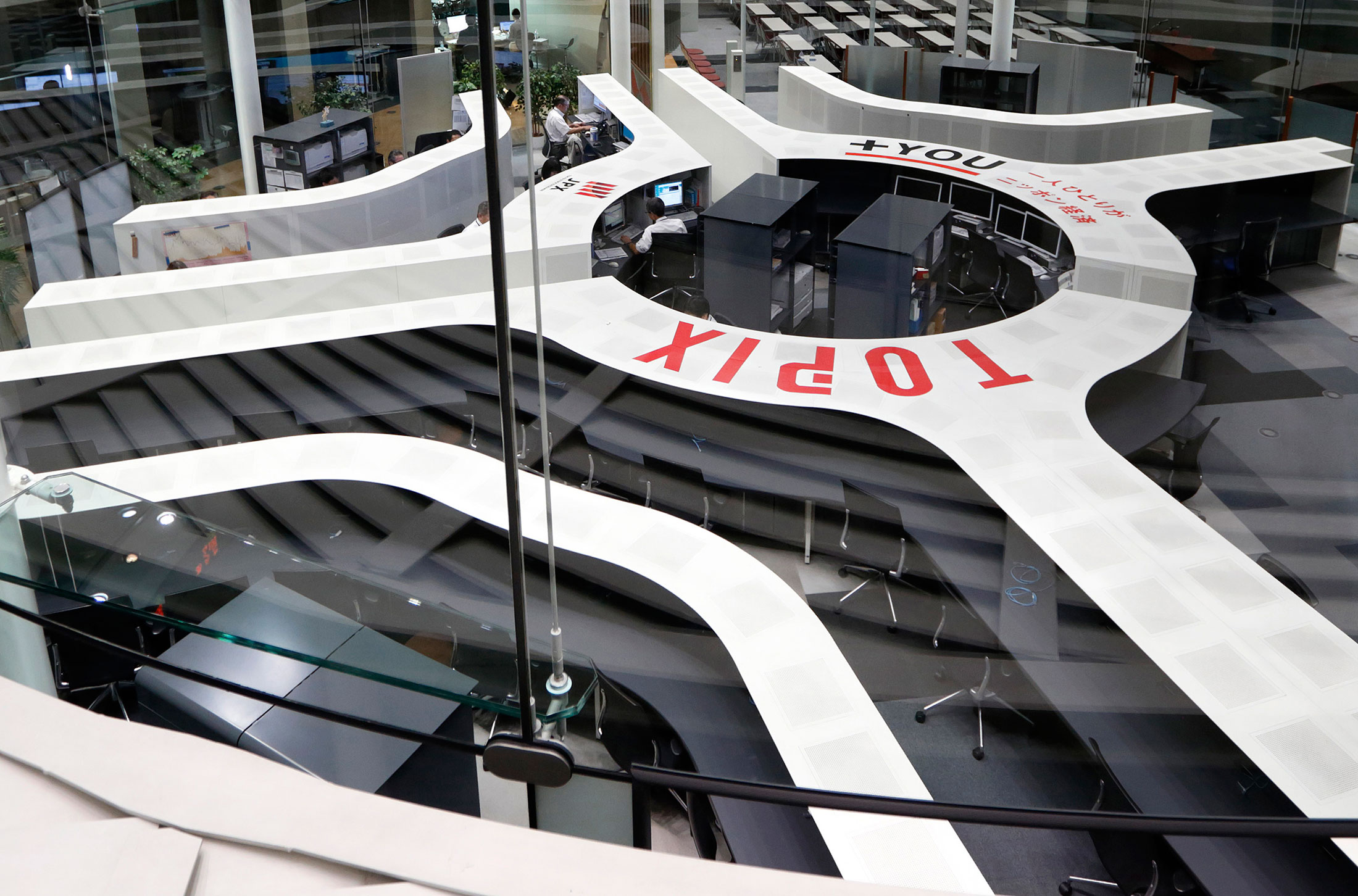
Donald Trump grabbed investors’ attention in an otherwise listless Asian trading session, with the yen rising and S&P 500 Index futures slipping with the Mexican peso as the U.S. president said he may end the North American Free-Trade Agreement.
Some of the earlier risk-on trade was unwound, with the dollar pulling back after Trump also threatened to shut down the U.S. government if he is unable to get funds to build a wall along the Mexican border. Asian stocks stalled, with benchmarks coming off their highs in Tokyo and declining in Sydney and Seoul. Hong Kong’s trading session was canceled for the day as a typhoon buffeted the city.
“The Nafta hot air may be as much an excuse to take a step back after Wall Street’s surge yesterday, as it is a legitimate concern about the president not appreciating nuances of inter-dependence embedded in trade deals,” said Vishnu Varathan, head of economics and strategy at Mizuho Bank Ltd. in Singapore. “The ‘she loves me, she loves me not’ thought process could lead to on-off markets.”
The risk-off reaction to Trump’s comments at a rally of his supporters in Phoenix contrasted with Tuesday’s mood on Wall Street, when stocks jumped amid optimism the president’s administration is making progress on tax reform.
“His comments on the Nafta negotiations once again brings the general direction toward obstructing free trade and raises concerns over its impact on global trade,” said Hideyuki Ishiguro, a senior strategist at Daiwa Securities Co. in Tokyo.
There is little top-tier economic data out this week and volumes are being kept low by the Northern Hemisphere summer. The focus turns to the annual conference of global central bankers that kicks off in Jackson Hole, Wyoming, on Thursday with sentiment among investors that global policy makers seem reluctant to tighten liquidity.
Geopolitical events continue to hover in the background. Trump said during his speech that North Korean leader Kim Jong Un is beginning to respect the U.S., the latest comments that suggest his administration is moving closer to seeking talks over Pyongyang’s nuclear arsenal. The U.S. tightened its financial restrictions on North Korea, slapping sanctions on Chinese and Russian entities it accused of assisting Pyongyang’s development of nuclear weapons and ballistic missiles.
In Asia on the economic front on Wednesday: Malaysia and Singapore July CPI, and Taiwan July industrial production. European Central Bank President Mario Draghi gives a speech in Germany on Wednesday with investors looking for any clues on how the central bank will proceed with its asset purchase program. Minutes from the Governing Council’s July meeting released last week showed that officials are uncertain how to signal changes in their policy settings. Combined sales of new (data Wednesday) and previously owned (Thursday) U.S. homes probably edged up in July from the prior month, indicating a still robust real estate market held in check by rising property prices, economists forecast. – Bloomberg